Storm Damage in Brookshire, IN
Surface water at your Brookshire doors and garage extracted and contained, with every step photographed.
Brookshire Water Restoration provides professional Storm Damage in Brookshire: emergency availability every day of the year, certified crews, and coordination with your insurance carrier on approved claims. Call (765) 676-3491.
- Service: Storm Damage for Brookshire homeowners
- Service area: Brookshire, IN and surrounding areas
- Response time: 24/7 live dispatch; emergency crews prioritized for Brookshire
- Licensed and insured (License #RC21100059)
- Serving Brookshire, IN since 2018
Storm Damage Cleanup in Brookshire
After a storm in Brookshire, we'll cover the opening first and then dry out what got wet.
Storms Here
Severe thunderstorms come through in spring and summer, and the occasional tornado comes with them. Storms here can also bring large hail. If your insurance company asks for a storm date, NWS Indianapolis keeps a list of past events.
Where Storm Water Ends Up
Homes near Cool Creek can see rising water after heavy rain. With full basements common here, a big storm can bring water in from below as well as through the roof. That makes it a basement flooding job too.
After a storm we can be anywhere in Brookshire, from Mohawk Crossing to the roads around the Monon Greenway and the Grey Road entrance. We also handle storm damage in Cool Creek subdivision and Hunters Glen.
Expert Storm Damage for Brookshire Homeowners
Ice built up along the eave backs water under the shingles and pushes it into the roof deck, and you usually find out when a stain appears where an upstairs wall meets the ceiling during a thaw. Freeze and thaw intrusion wets insulation and framing you can't reach from a ladder or see from the floor. Brookshire Water Restoration crews work storm water losses in Brookshire, IN and dispatch within 2 hours to open the assembly where the meters say the water went.
Ask any company that bids your storm damage to show the readings behind its scope. Brookshire Water Restoration puts a reading or a photo behind every line, from the tarp to the last ceiling patch in your Brookshire home. If another bid replaces more ceiling or more insulation, those readings are the way to compare the two apples to apples.
Contents get handled before extraction begins. Furniture comes off wet carpet or gets its legs blocked, and rugs and boxes move to dry rooms. Photos are taken of anything that shifts, so there's a record of what sat where. Small valuables and papers stay with you, which keeps wet items from staining the flooring in your Brookshire home.
Before wet carpet or insulation goes in a dumpster, ask your adjuster whether they want to see it. The crew photographs the material in place and records its type and amount, and a small sample can be set aside if the adjuster asks. Brookshire Water Restoration lays out the removal list for your Brookshire home so that conversation has facts behind it.
Wet insulation above a ceiling doesn't dry on its own, and the drywall underneath it has a limit. Call Brookshire Water Restoration and a crew is dispatched to your Brookshire, IN home within 2 hours with meters, extraction and drying equipment, and a photo report you keep.
Signs You Need Storm Damage Restoration
If you notice any of these in your Brookshire home, schedule a free inspection before the issue worsens.
A wet soffit or ceiling corner on a covered porch after wind pushed rain up under the eave
Recessed ceiling lights with water droplets around the trim after heavy rain
Thick ice built up in the gutter with icicles hanging along the edge of the eave
Plaster ceilings with fresh hairline cracks and a dull, damp look
Puddles along an exterior wall or standing water in a basement window well after heavy rain
Window or door trim swollen and sticking that opened and closed fine last week
Water stains running down a stairwell wall from the upper floor
Dark water line on basement drywall several inches above the floor
Ceiling stains in a hallway or closet far from any bathroom
Standing water in the track of a sliding patio door after a storm
How Brookshire Water Restoration Handles Storm Damage
We follow these steps in order on every Brookshire job.
Water Source Call
The crew checks where the water came in and what it touched on the way, and photographs the entry point. Floodwater that came in at grade gets containment and protective gear before any work starts.
Wall Cavity Inspection
Baseboards and window trim come off where readings run high, and small inspection holes show whether the cavity behind them holds water. Windows and doors that took wind driven rain usually leave the wall base wet first.
Cleaning Surfaces That Stay
Framing and hard surfaces that stay get cleaned and treated with an antimicrobial once the soaked material is out. Cleaning comes before the drying equipment goes in, so the air movers aren't pushing soil around the room.
Attic and Cavity Drying
Air movers aim at wet surfaces, dehumidification is sized to the containment volume, and negative air cavity drying runs through small ports where a ceiling or wall doesn't have to come down to dry. Humidity gets tracked inside and outside the drying area.
Reconstruction and Finish Work
Insulation goes back to the recorded depth, ceiling board gets hung, taped and finished, texture is matched to the existing surface, then paint, trim, flooring and anything else that came out. The rebuild follows the measurements taken during the drying.
Storm Damage in Brookshire
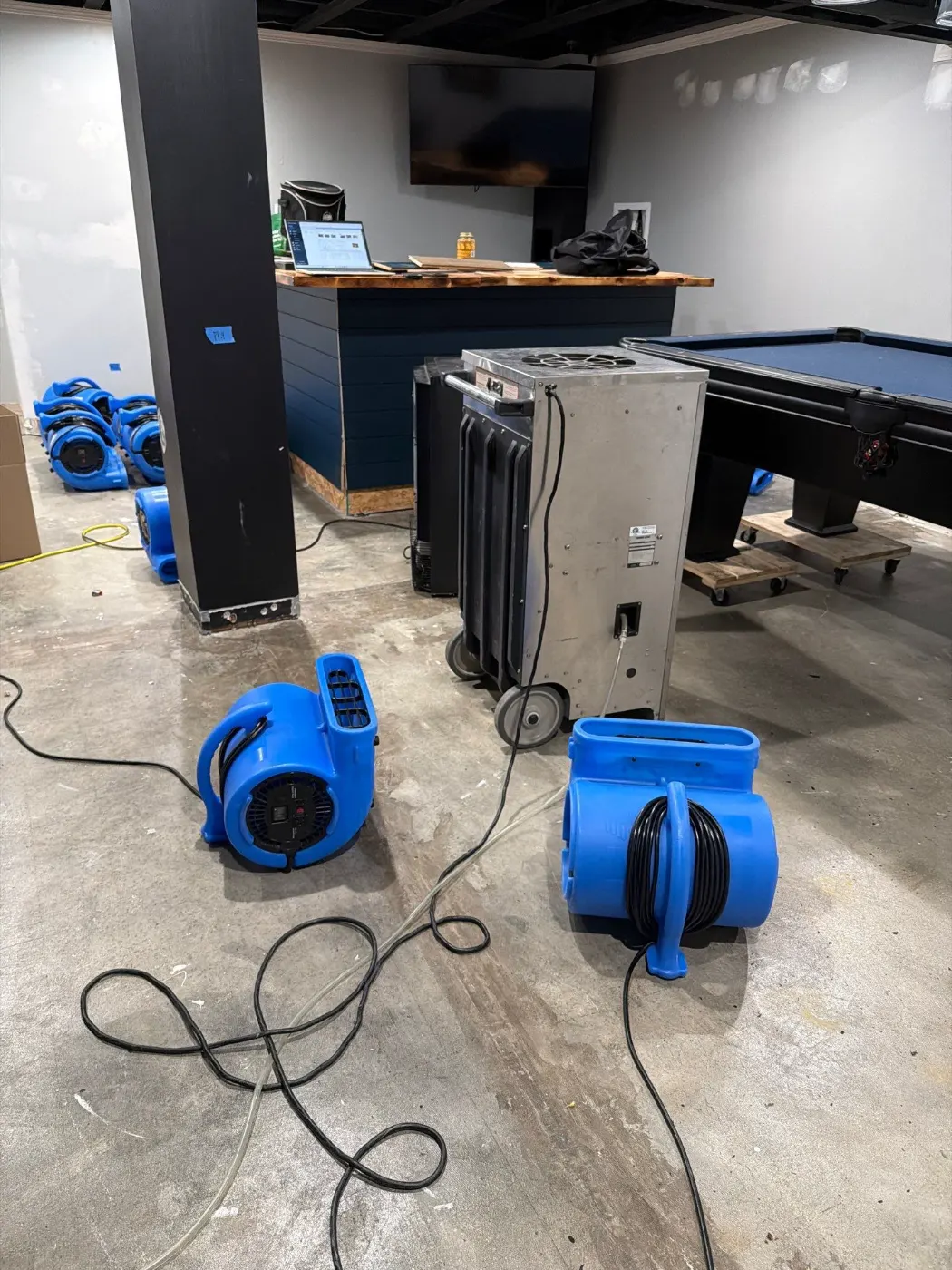
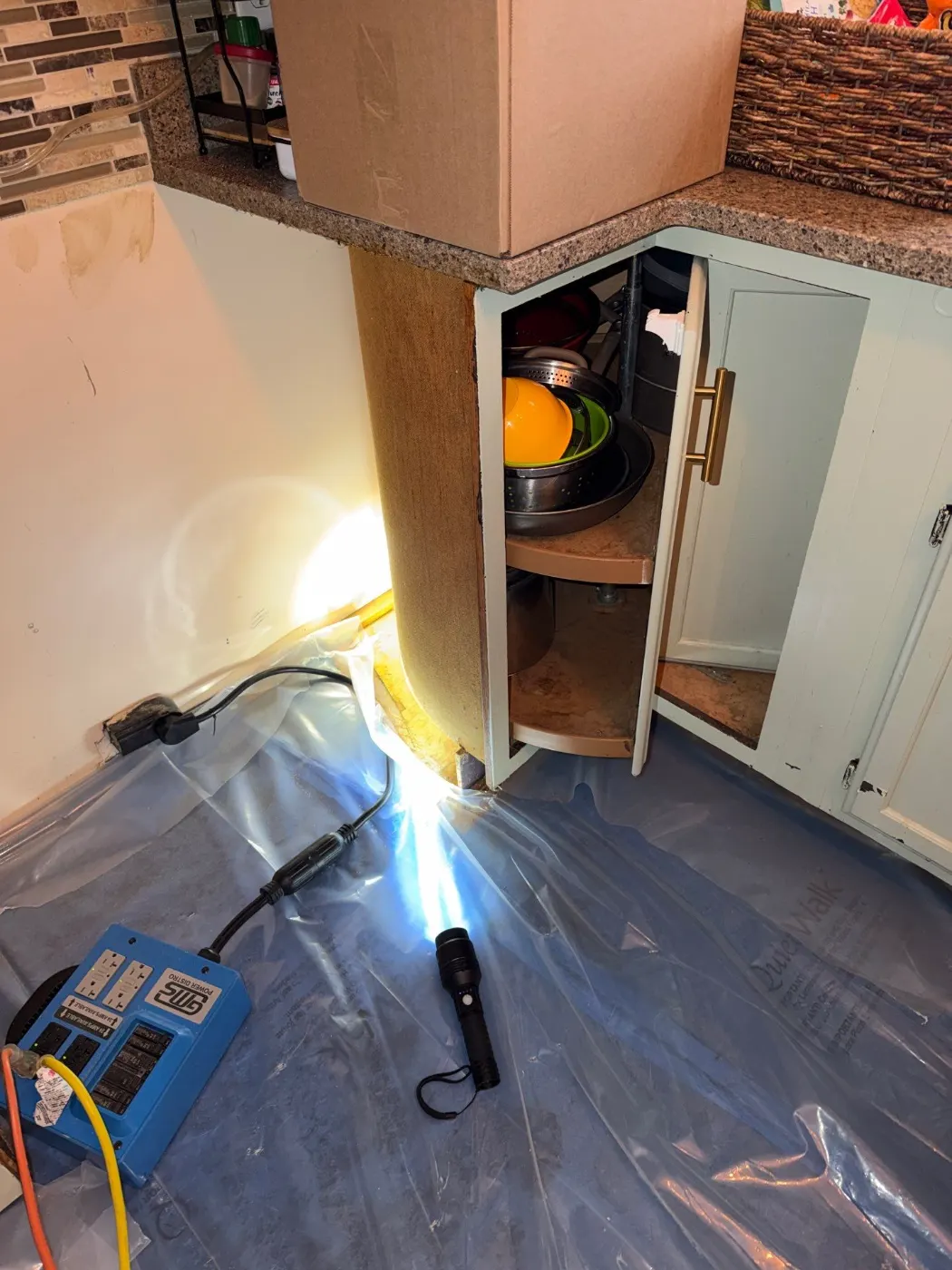
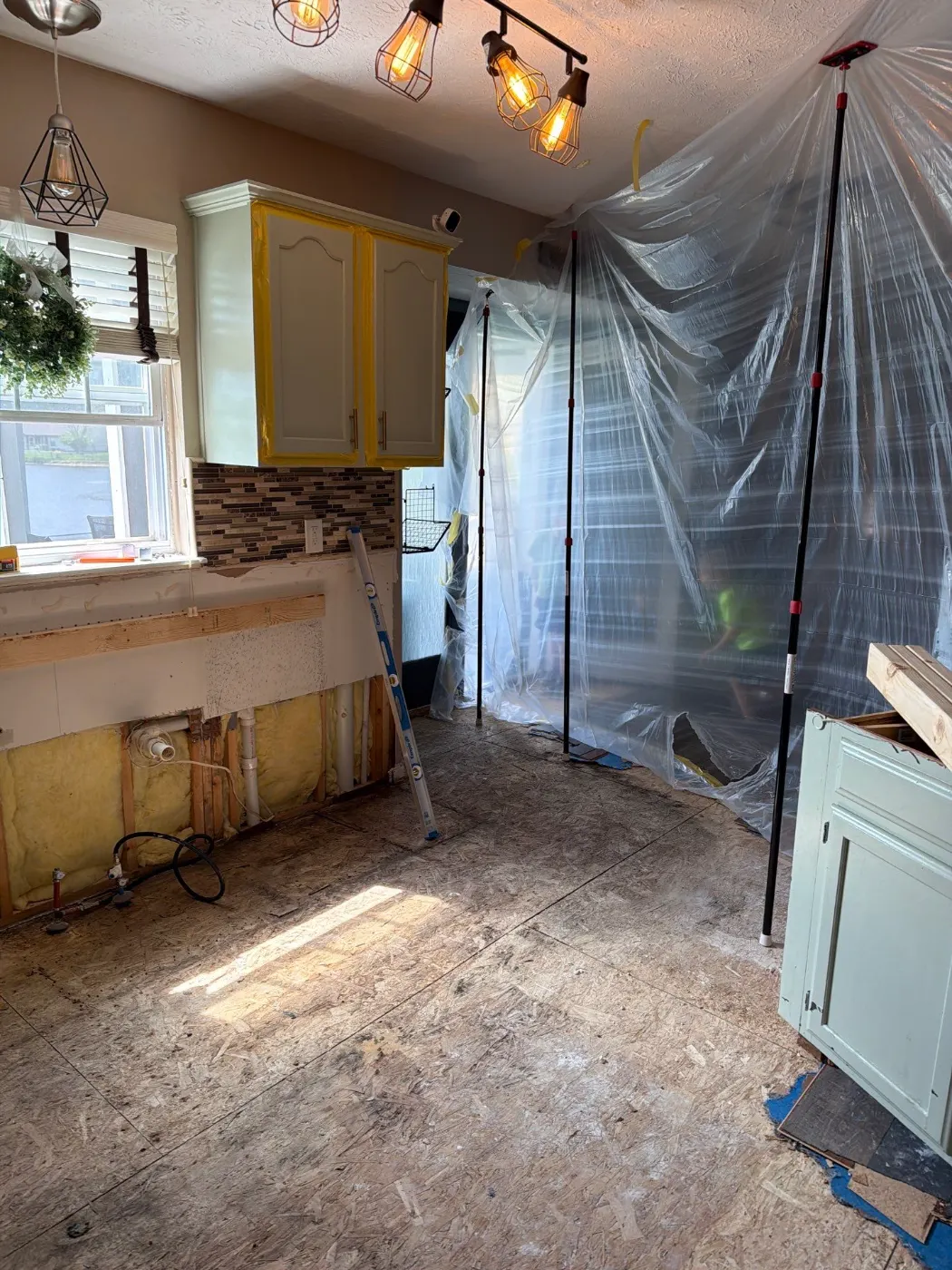
Photographs from real storm damage jobs completed by our crew in Brookshire and surrounding areas.
Storm Damage FAQ
Questions Brookshire homeowners ask us about storm damage restoration.
Guidance and Standards for Storm Damage
- The National Weather Service office in Indianapolis posts summaries of recent central Indiana storm and flood events. NWS Indianapolis Event Summaries
- The Indiana Department of Insurance advises against permanent repairs before your insurance company inspects the damage. Check your own policy for what it covers. Indiana Department of Insurance: Insurance Claim Tips
Brookshire Neighborhoods We Serve
We take storm damage calls in every part of Brookshire. Pick your neighborhood for local details.
Other Restoration Services in Brookshire
Brookshire Water Restoration handles the full scope of restoration work. Explore our other services below.
Water Damage Restoration in Brookshire
24/7 emergency response. IICRC certified water restoration from extraction to full dry out.
Learn more →Basement Flooding in Brookshire
Basement water emergencies handled fast. Extraction, drying, mold prevention.
Learn more →Sewage Cleanup in Brookshire
Category 3 biohazard cleanup. Full containment, decontamination, structural restoration.
Learn more →Request Storm Damage Restoration
Reach Us Directly
Our team is available 24/7 for emergencies and ready to schedule inspections during business hours.
Need Immediate Help?
For active water or mold emergencies, call us directly. We are available 24/7.